
South Korean Won Logs Biggest Gain Among Major Currencies as Yen Hits 40-Year Low
The South Korean won posted its strongest performance among major currencies since late June, while the Japanese yen slid to its weakest level in four decades.
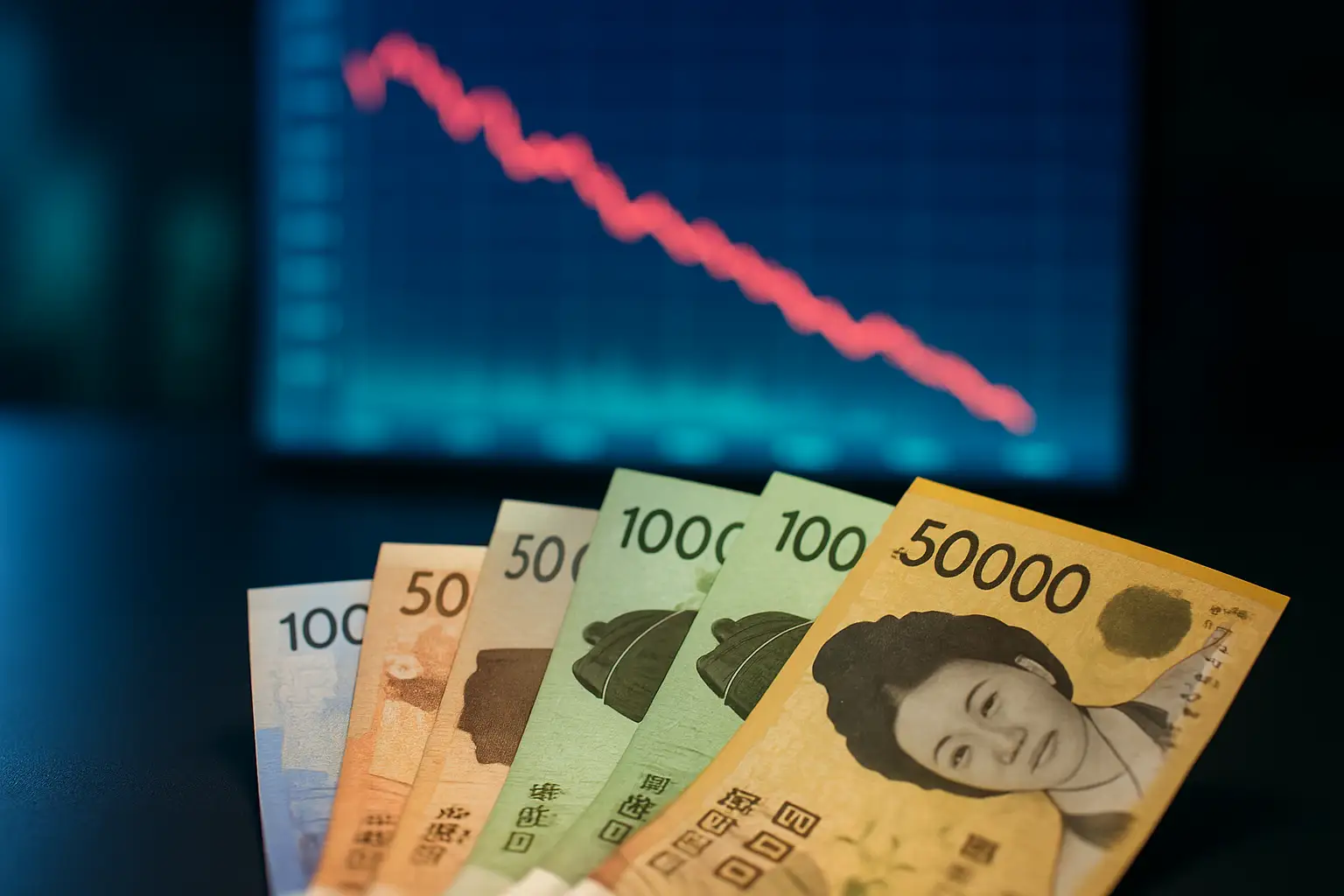


Won Surges While Yen Hits Historic Weakness
The South Korean won recorded its biggest single-session gain among major currencies since late June, according to reporting by Bloomingbit. The move came as the Japanese yen fell to a 40-year low, reshaping the short-term outlook for Asian currency markets.
The won's advance stood out in a region where currency pressure has been a persistent theme. While many Asian currencies have faced headwinds from a strong US dollar and rising US Treasury yields, the won bucked that trend to post a notable rally.
The yen, by contrast, continued its steep slide. A drop to levels not seen in four decades signals how far monetary policy divergence between Japan and other major economies has stretched. The Bank of Japan has maintained an ultra-loose policy stance even as the US Federal Reserve has kept interest rates elevated, and that gap has weighed heavily on the yen for months.
What the Yen's Fall Means for the Region
A 40-year low for the yen is not just a Japan story. Neighboring export economies watch the yen closely because a weaker yen makes Japanese goods cheaper on global markets, putting competitive pressure on South Korean and other Asian exporters.
For South Korea, sectors like semiconductors, automobiles, and consumer electronics compete directly with Japanese rivals. A softer yen can erode South Korean exporters' pricing power abroad, which makes the won's simultaneous gain an interesting dynamic. Strength in the won, if sustained, could add its own layer of pressure on South Korean exporters even as the yen-driven competitive threat grows.
Currency traders and analysts tend to watch the won-yen cross rate carefully for exactly this reason. When the yen falls sharply and the won rises at the same time, the spread between the two widens fast, and that can have real consequences for corporate earnings on both sides of the Korea Strait.
Context for Crypto and Digital Asset Markets
Currency volatility of this scale carries ripple effects into digital asset markets. South Korea is one of the largest retail crypto trading hubs in the world, and the won is among the most actively used fiat currencies in crypto exchange volume. Sharp moves in the won tend to influence how Korean retail traders price and access Bitcoin, Ether, and other digital assets.
Historically, a stronger won has reduced the so-called "kimchi premium," the price difference between crypto assets trading on Korean exchanges versus global platforms. A weaker won, on the other hand, has sometimes pushed Korean investors toward dollar-denominated assets including crypto as a hedge. The current environment, with the won gaining ground, may dampen that particular dynamic in the near term.
On the Japanese side, the yen's collapse to multi-decade lows has previously correlated with periods of increased retail interest in Bitcoin in Japan, as some investors seek alternatives to a depreciating local currency. Whether that pattern repeats will depend on how long the yen stays under pressure and whether Japanese authorities intervene in currency markets as they have done in prior episodes of yen weakness.
Japan's finance ministry has a track record of stepping in with yen-buying interventions when the currency falls too far too fast. Any intervention signal could reverse some of the current moves quickly, so traders in both FX and crypto markets are watching official commentary from Tokyo closely.
The broader takeaway from this week's moves is that Asian currency markets remain under significant stress from the global interest rate environment. The won's outperformance offers a brief moment of relief for South Korean assets, but the structural pressures driving yen weakness have not gone away. Until the Federal Reserve shifts toward rate cuts or the Bank of Japan moves more decisively toward policy normalization, this divergence is likely to keep producing sharp and sometimes unpredictable swings across the region's currencies and the asset classes tied to them.


Crypto & Markets Analyst
Jordan breaks down crypto markets and digital assets for everyday readers.