
Crypto vs. the Moon: Bloomberg Weighs Two Unlikely Investments
Bloomberg has put crypto and lunar investment in the same conversation, raising questions about risk, speculation, and where serious money might actually go next.


Crypto as an Investment Gets Some Unusual Competition
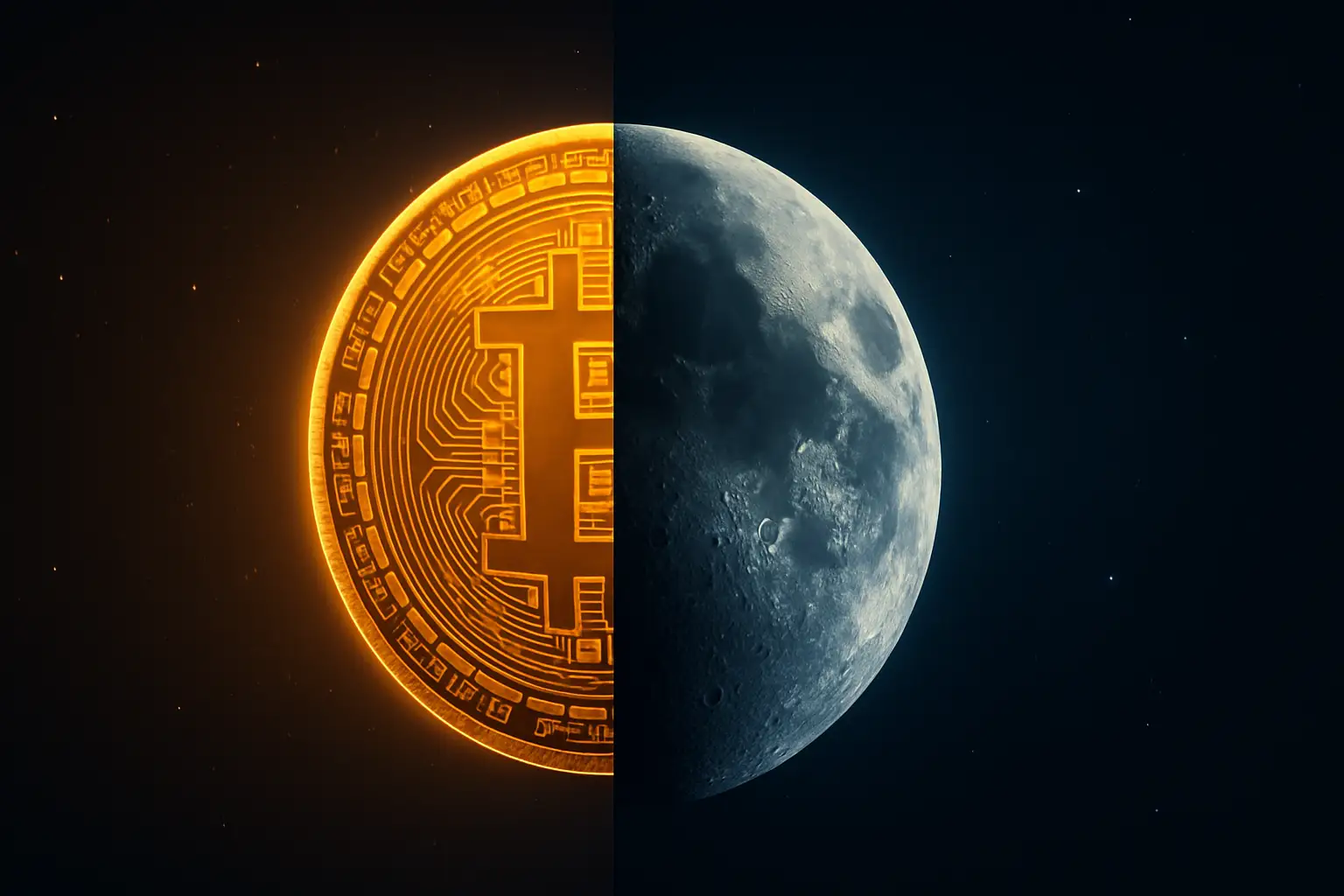
Bloomberg recently posed a question that would have seemed absurd a decade ago: is crypto a better investment than the Moon? The comparison, published by the financial media outlet, reflects just how far both speculative assets and space-related ventures have entered mainstream investment discourse.
The framing is deliberately provocative. Putting crypto in the same sentence as lunar real estate or moon-related commercial ventures forces investors to confront a shared characteristic: both involve enormous uncertainty, long time horizons, and a heavy dose of belief that the future will look radically different from the present.
Bloomberg has not historically been a publication that takes either proposition lightly. The fact that its editorial team framed the two as comparable options worth debating signals something about where financial conversation is heading.
What the Comparison Actually Reveals
On its surface, the crypto-versus-moon question is a rhetorical device. Nobody is literally choosing between buying Bitcoin and purchasing a lunar plot. But the underlying logic is serious.
Crypto markets have matured considerably. Bitcoin has spot ETFs trading in the United States. Institutional money has moved in. Regulatory frameworks, while still incomplete in many jurisdictions, are taking shape. The asset class is no longer purely the domain of early adopters and ideological libertarians.
Lunar investment, by contrast, remains almost entirely theoretical for retail participants. Commercial interest in the Moon is real, driven by space agencies and private companies competing for contracts, resources, and positioning. But an ordinary investor cannot buy a lunar futures contract or park savings in a Moon index fund, at least not yet.
The Bloomberg piece uses the contrast to highlight how differently risk gets priced depending on narrative. Crypto has a functioning market with daily liquidity. Lunar ambitions are long-duration bets on geopolitical and technological outcomes that may not resolve for decades.
Risk, Speculation, and the Investor Mindset
What connects the two subjects is the role of speculation. Both crypto and space commercialization attract capital based largely on projected futures rather than current cash flows. Critics of crypto have made exactly this point for years, and the same critique applies to early-stage space ventures.
The difference is that crypto has already produced winners and losers at scale. People have made and lost fortunes. The feedback loop is fast. Space investment, moon-related or otherwise, operates on timelines that outlast most investment theses.
For a retail investor trying to make a practical decision, that distinction matters. Crypto offers volatility with near-instant liquidity. You can exit a position in minutes. A bet on lunar development, whether through aerospace stocks or speculative land claims, locks up capital with no guarantee of a liquid exit.
Bloomberg's framing also nudges readers to think about what makes something a credible investment category in the first place. Crypto crossed that threshold through sheer market volume and institutional adoption. The Moon has not, at least not in any form accessible to most people.
Why the Conversation Is Happening Now
The timing of this comparison is not accidental. Several governments and private companies have announced renewed lunar programs. NASA's Artemis missions, competing Chinese lunar projects, and private landers have kept the Moon in the news cycle. Meanwhile, crypto markets have recovered significantly from the lows of 2022 and 2023.
Both stories are running in parallel, which creates an editorial opportunity to ask which represents the better speculative bet for the years ahead. Bloomberg took that opportunity.
The honest answer, based on what can actually be verified today, is that the two are not really comparable in practical terms. Crypto is an investable asset class with real market infrastructure. Lunar investment, for most people, is not a thing you can actually do in a direct and liquid way.
But the question itself is worth sitting with. It pushes investors to be honest about what they are really buying when they put money into any high-speculation category: not current value, but a narrative about where the world is going. Crypto and the Moon both sell that narrative aggressively. The difference is that one of them already has a price ticker.


Crypto & Markets Analyst
Jordan breaks down crypto markets and digital assets for everyday readers.