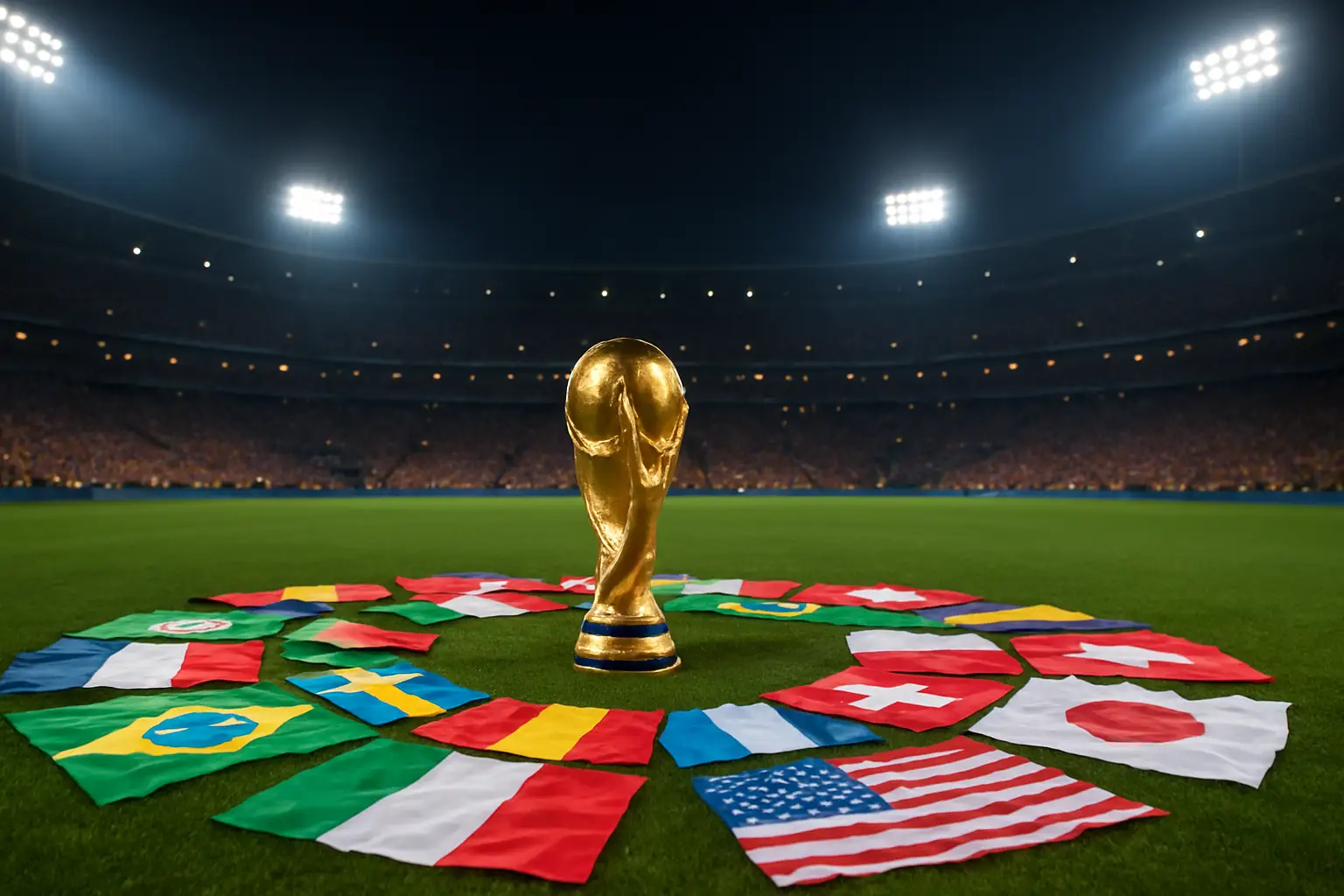
FIFA Eyes $20 Billion World Cup Equity Capital Push
FIFA is launching equity capital operations tied to the World Cup valued at approximately $20 billion, signaling a major shift in how football's global governing body finances its flagship tournament.



FIFA Moves to Raise $20 Billion Through World Cup Equity
FIFA is moving forward with equity capital operations linked to the World Cup, with the total value of the initiative reported at around $20 billion, according to reporting from 36Kr. The scale of the operation marks one of the most ambitious financial maneuvers the governing body of world football has undertaken in recent memory.
The move reflects FIFA's broader effort to diversify its revenue streams beyond traditional broadcast rights and sponsorship deals. By structuring equity capital operations around its most valuable commercial property, the World Cup, FIFA is essentially opening the tournament's financial upside to outside investors in a structured way.
Details on the specific structure of the equity offering, including which investors are being targeted and over what timeline capital would be raised, were not fully disclosed in the initial report. What is clear is the headline valuation: $20 billion, a figure that underscores how FIFA views the long-term commercial power of the World Cup brand.
Why This Matters for Football Finance
The World Cup is the single most-watched sporting event on the planet. FIFA's decision to attach equity capital operations to it signals confidence that outside investors see durable, long-term value in the tournament beyond any single cycle.
For context, FIFA has historically relied on selling media rights and commercial partnerships every four years to fund both the tournament itself and its broader development programs. An equity model introduces a fundamentally different dynamic, one where investors take a stake in future revenues rather than paying a fixed fee for a defined right.
If FIFA completes this capital raise anywhere near the $20 billion figure, it would give the organization a substantial war chest. That money could be deployed toward hosting infrastructure support, prize money increases, or the expansion of competitions like the Club World Cup, which FIFA has already been scaling aggressively.
The timing is also notable. The 2026 World Cup, co-hosted by the United States, Canada, and Mexico, is shaping up to be the largest in tournament history by team count, with 48 nations competing. A bigger tournament means bigger audiences, bigger sponsorship inventory, and stronger arguments to potential equity investors about future cash flows.
Investor Appetite and Risk Considerations
Large-scale sports equity raises have become more common globally over the past several years. Private equity firms and sovereign wealth funds have poured capital into football clubs, media rights packages, and league ownership stakes across Europe and the Americas. FIFA tapping that same investor appetite for the World Cup itself is a logical, if bold, extension of that trend.
However, the structure of any FIFA equity deal would need to navigate significant complexity. FIFA is a nonprofit organization headquartered in Switzerland, and its governance model is unlike a publicly traded corporation. Defining what equity actually means in that context, what rights investors receive, how returns are generated, and over what time horizon, will be critical questions any sophisticated investor would demand answers to before committing capital.
There are also reputational and governance considerations. FIFA has faced sustained scrutiny over financial transparency since the corruption scandals that became public in 2015. Any new capital operation at this scale will draw attention from regulators, member federations, and reform advocates who will want assurances that funds are managed responsibly.
What Comes Next
The 36Kr report does not specify a closing date or a formal launch timeline for the equity capital operations. Further disclosures from FIFA or its financial advisers will be needed before the full shape of this initiative becomes clear.
What is already apparent is that FIFA is thinking about the World Cup not just as a quadrennial event but as a permanent financial asset capable of attracting institutional investment. If the $20 billion valuation holds and capital is successfully raised, it could reshape how major international sporting bodies approach long-term financing for decades to come.


Football Correspondent
Alex covers football and the global game with fast, sharp analysis.