Rogers Sets 510TB Data Record on 5G+ Network at FIFA World Cup
Rogers Communications handled a record 510TB of data on its 5G+ network during the FIFA World Cup matches held in Canada, marking a milestone for mobile connectivity at major sporting events.


Rogers Hits 510TB During FIFA World Cup in Canada
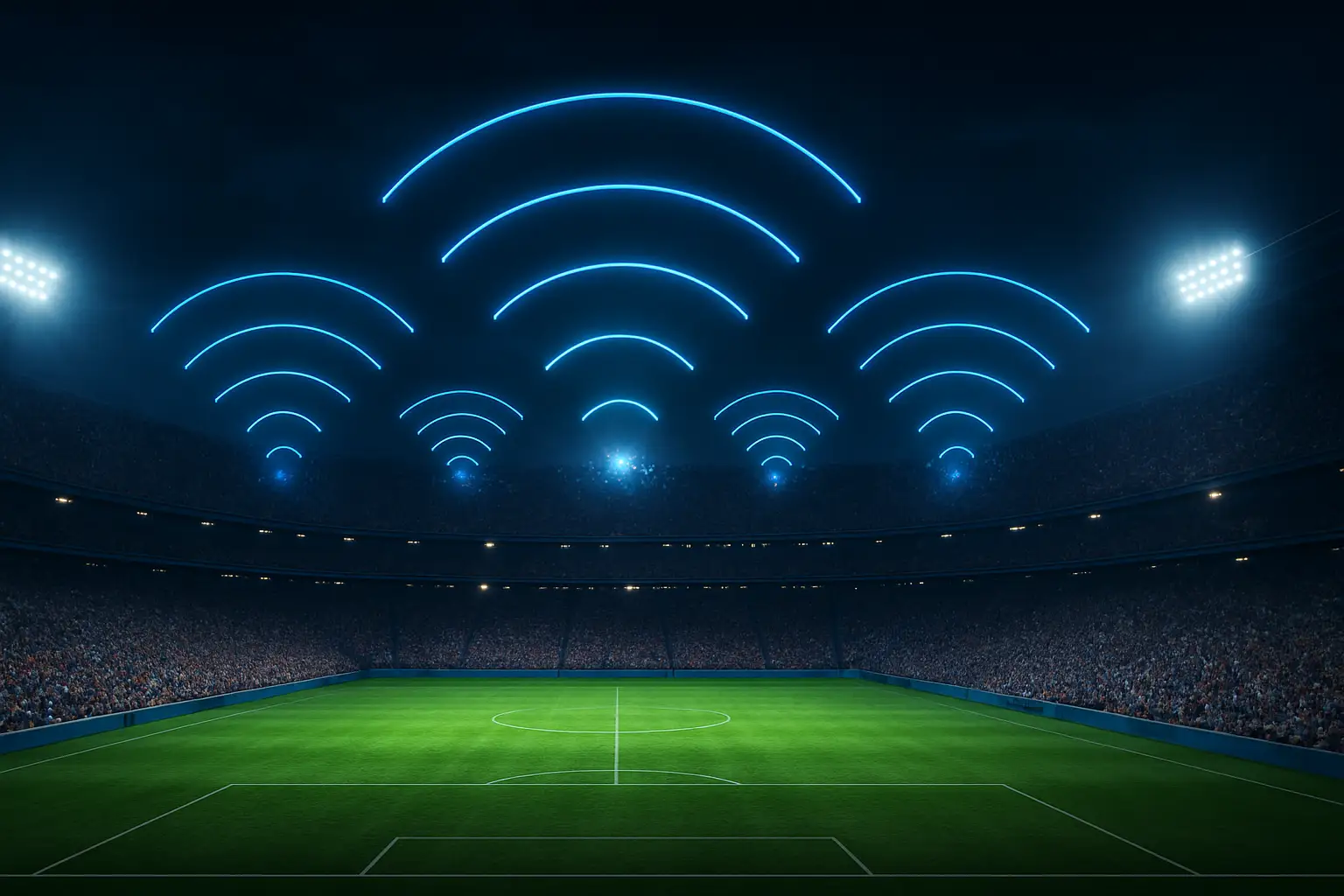
Rogers Communications processed a record 510 terabytes of data across its 5G+ network during FIFA World Cup matches played in Canada, according to reporting by The Fast Mode. The figure represents the highest data load the Canadian carrier has handled during a single sporting event, reflecting just how much fan connectivity has changed at stadiums and surrounding areas.
The milestone puts a hard number on something telecom engineers have long predicted: as more fans stream video, share content, and use real-time apps inside and around venues, the data load at major events will keep climbing. A World Cup, with its global audience and packed stadiums, is exactly the kind of pressure test that exposes network limits - or in this case, network capacity.
What 510TB Actually Means
To put the number in perspective, 510TB is enough data to stream high-definition video continuously for tens of thousands of hours. At a football tournament of this scale, that demand comes in sharp bursts: goal moments, halftime breaks, and post-match windows all drive sudden spikes that a network has to absorb without dropping connections or slowing speeds.
Rogers deployed its 5G+ infrastructure - the carrier's higher-frequency, higher-capacity tier of 5G service - across the host cities in Canada. That technology is designed specifically for dense environments where many devices compete for bandwidth at the same time, making it a natural fit for World Cup venues.
The record was not simply a product of fan volume. It also reflects how differently people now consume a live event. Spectators inside a stadium are simultaneously watching replays on their phones, uploading clips to social platforms, video-calling people watching from home, and using ticketing or navigation apps. Each of those behaviors adds to the aggregate load on the local network.
5G at Major Football Events
The FIFA World Cup 2026 is being co-hosted by Canada, the United States, and Mexico, with Canadian cities taking on a portion of the group-stage and knockout matches. That gave Rogers a direct opportunity to demonstrate its network under genuine tournament conditions rather than in a controlled test environment.
Carriers globally have been competing to position 5G as the backbone of live sports infrastructure. A verified record like 510TB gives Rogers a concrete benchmark it can point to when bidding for future event partnerships or pitching enterprise connectivity solutions to venues and broadcasters.
For football fans, the practical takeaway is simpler: the network held up. A record data figure only matters if the service behind it remained reliable, and Rogers framed the announcement as evidence that its 5G+ infrastructure performed under one of the most demanding real-world conditions a mobile network faces.
Whether Canada's hosting experience sets a template for the remaining matches across North America remains to be seen, but the numbers Rogers posted during the tournament will be a reference point for how 5G performs when the world is watching.


Football Correspondent
Alex covers football and the global game with fast, sharp analysis.