
Iowa's Hands-Free Law at 6 Months: Drivers Still Watching Football on Phones
Six months after Iowa's hands-free driving law took effect, law enforcement officers are still catching drivers streaming full football games and movies behind the wheel.
Six Months In, Old Habits Die Hard
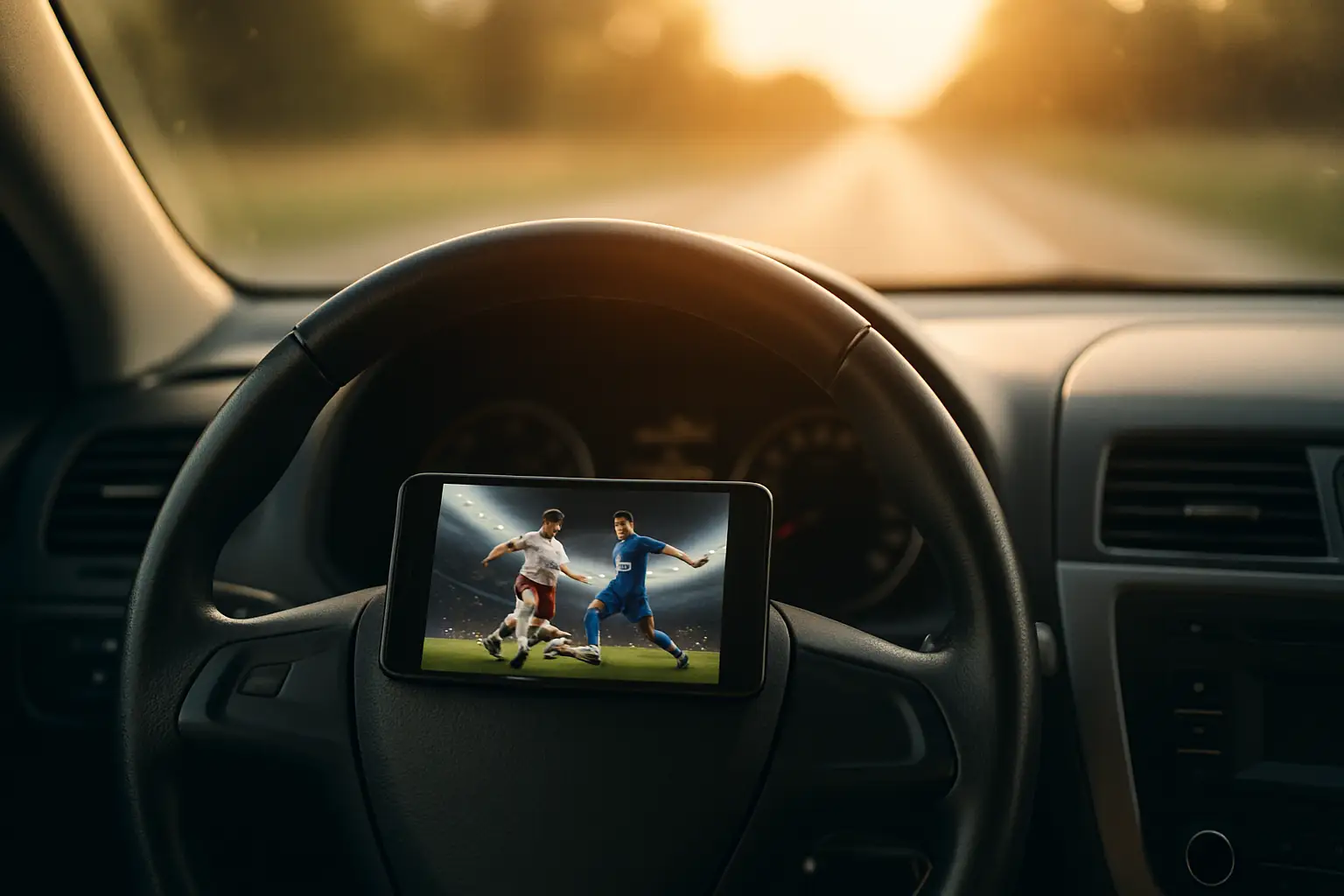
Iowa's hands-free driving law has been on the books for half a year, but a disturbing pattern keeps showing up on the state's roads. According to reporting by KCRG, officers pulling over distracted drivers are finding people doing far more than sending a quick text. Some are streaming entire football games. Others are watching movies. All of them are doing it at the wheel.
The law, which requires drivers to use hands-free technology when operating a phone while driving, was designed to cut down on distracted driving crashes. The intent was clear. The compliance, apparently, is not.
Officers describe a culture of phone use that has proven stubborn to change. Despite the new law carrying real penalties, drivers are continuing to hold and use devices in ways that go well beyond a glance at a notification. Watching a football game on a phone while navigating traffic is not a gray area, yet it is exactly the kind of behavior enforcement teams say they keep encountering.
What the Law Requires and What Officers Are Seeing
Under Iowa's hands-free law, drivers cannot hold or use a phone with their hand while the vehicle is moving. Calls must be routed through Bluetooth or a speakerphone placed somewhere it does not require handling. Texting, scrolling, and video streaming are all prohibited while driving.
The violations officers are documenting suggest a portion of the driving public either does not know the law exists or has decided to ignore it. Streaming a live football game on a phone requires sustained attention to a screen, repeated taps to rewind or adjust volume, and mental focus pulled entirely away from the road. It is one of the more extreme examples of what hands-free laws were written to prevent.
Law enforcement sources cited in the KCRG report note that the variety of violations has been wide. The football game and movie examples stood out because they illustrate how far some drivers have drifted from any reasonable interpretation of safe driving.
Why Enforcement Remains a Challenge
Catching hands-free violations is not as straightforward as clocking speed with a radar gun. Officers typically need a direct line of sight into a vehicle at the right moment. Many violations go undetected simply because the opportunity to observe them is brief.
Public awareness campaigns have accompanied the law, but awareness does not always translate to behavior change. Research on similar hands-free laws in other states has consistently shown that violations drop in the weeks after a law passes, when media coverage is heavy and warnings are fresh, then creep back up as attention fades.
Iowa is now at that six-month mark where the initial surge of compliance awareness tends to soften. Whether the state ramps up enforcement efforts or relies on the slow grind of citation-driven deterrence remains to be seen.
The Football Connection and Road Safety
For football fans, game day presents a particular temptation. Watching a live game while commuting or running errands feels like efficient multitasking. It is not. A driver watching a football broadcast on a phone is functionally not watching the road, and the unpredictability of live sports, a sudden touchdown, a contested call, makes the distraction more intense, not less.
Safety advocates have long argued that the problem with phone use while driving is not just manual distraction, the hands occupied with a device, but cognitive distraction. A driver whose attention is split between a third-quarter drive and a busy intersection is impaired in a meaningful way, even if their hands are technically free.
Iowa's law targets the manual element, which is a measurable and enforceable standard. Fully eliminating the cognitive pull of a phone screen is harder to legislate, and the football game examples suggest that gap is still very much open.
For now, state law enforcement continues to write citations and issue warnings. The six-month check-in is a reminder that passing a law and changing driver behavior are two very different milestones.

Football Correspondent
Alex covers football and the global game with fast, sharp analysis.